What Makes a Glow Serum Actually Work for Skin
A glow serum works when its ingredients are extracted in ways that preserve their potency, and used at concentrations high enough to matter. Cold-pressed and CO2-extracted botanicals retain far more of their active compounds than heat-processed or diluted oils. That is why extraction method and formulation decide whether a serum delivers, not the ingredient names printed on the front of the bottle.
Why Most Glow Serums Underdeliver
The word "glow" appears on almost every serum label in skincare. Most of them use the same handful of oils, processed the same industrial way, at concentrations too low to change anything. The label says radiance. The formula says otherwise.
This is not a small distinction. Refining strips an oil of the compounds that actually did the work: the antioxidants, the fatty acids, the phytosterols. What is left behind smells neutral, lasts longer on a shelf, and costs less to produce. It also does far less for skin. A woman who has been burned by products that overpromise and underdeliver is not wrong to be skeptical. The industry earned that skepticism.
What Actually Determines Whether a Serum Delivers Glow
Three things decide whether a glow serum works: how the ingredients were extracted, how concentrated they are, and whether the formula was built around what each ingredient does, not just what it is called.
Extraction method. Cold-pressing uses mechanical pressure alone, with no heat and no chemical solvents. This preserves the fragile compounds, tocopherols, carotenoids, and phenolic antioxidants, that heat and solvent processing destroys. A peer-reviewed study on cold-pressed plant oils found they retain significantly higher concentrations of these bioactive compounds than their refined counterparts. CO2 extraction achieves a similar result for oils that do not lend themselves to cold-pressing, using pressurized carbon dioxide instead of heat.
Concentration. An ingredient listed at the bottom of an INCI list is present in trace amounts, often enough to justify a marketing claim and not enough to change skin. A formula built around four or five botanicals at meaningful concentrations does more than one built around twenty at homeopathic doses.
Formulation intent. The best formulas are not a collection of trending ingredients. Each one is chosen for a specific role, and the combination is considered as carefully as any single ingredient. A published study on extra virgin olive oil found that cold-pressed extraction retains a higher concentration of bioactive compounds that support skin barrier function, specifically because the absence of heat or chemical processing leaves those compounds intact.
Four Things Worth Checking Before You Buy a Glow Serum
- Is the extraction method disclosed? Cold-pressed and CO2-extracted are worth looking for. "Refined" or unspecified almost always means heat and solvent processing.
- Is the origin specific? A brand that names the country or region a botanical comes from is usually sourcing with more care than one that says "naturally derived."
- Is it certified organic where it matters? Organic certification is not required for a formula to work, but it usually signals a brand paying attention to sourcing throughout.
- How does it actually feel on skin? A well-formulated oil serum absorbs. It does not sit on the surface or leave a heavy film. If it feels greasy twenty minutes in, something in the formulation is off.
How the Glow Face Serum Applies This
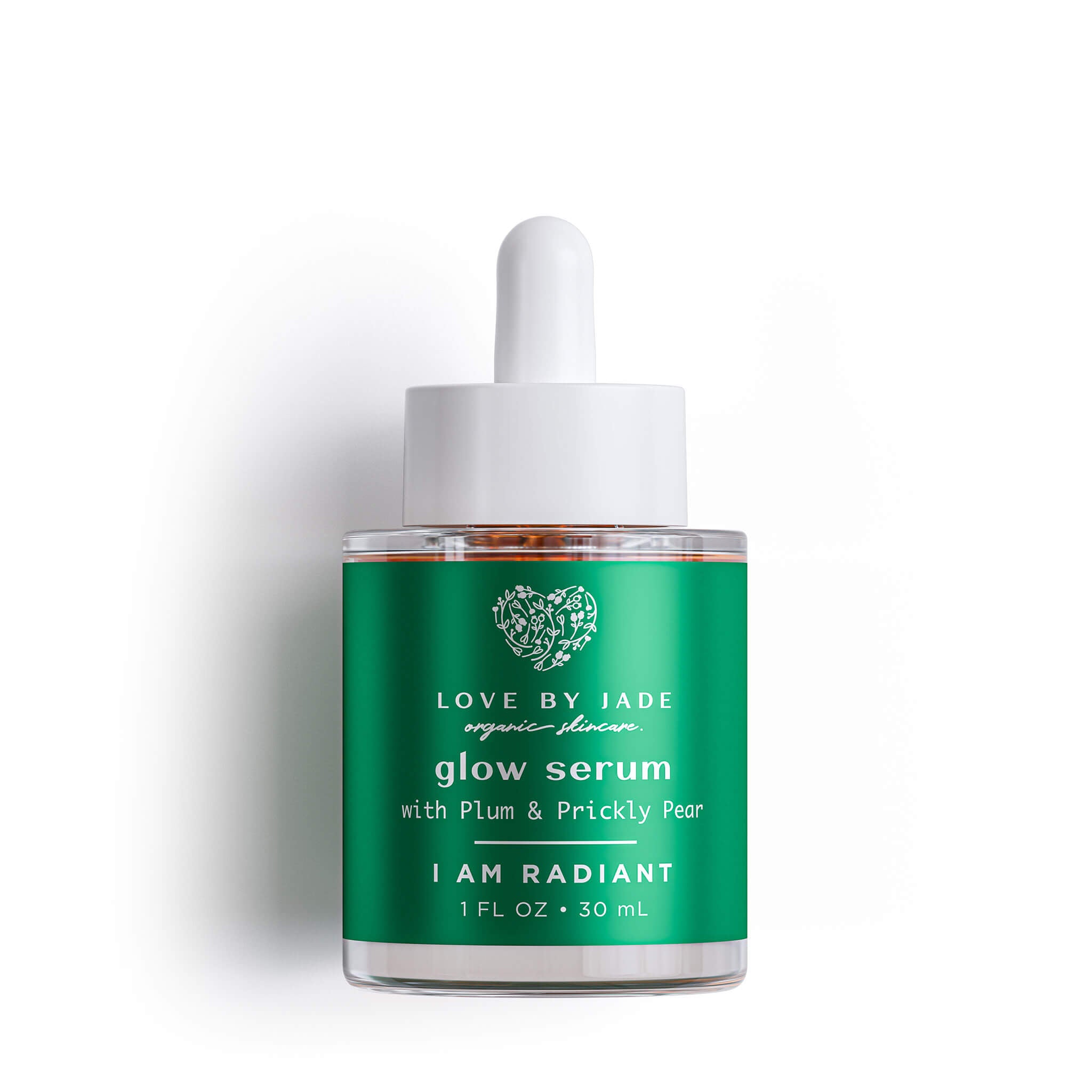
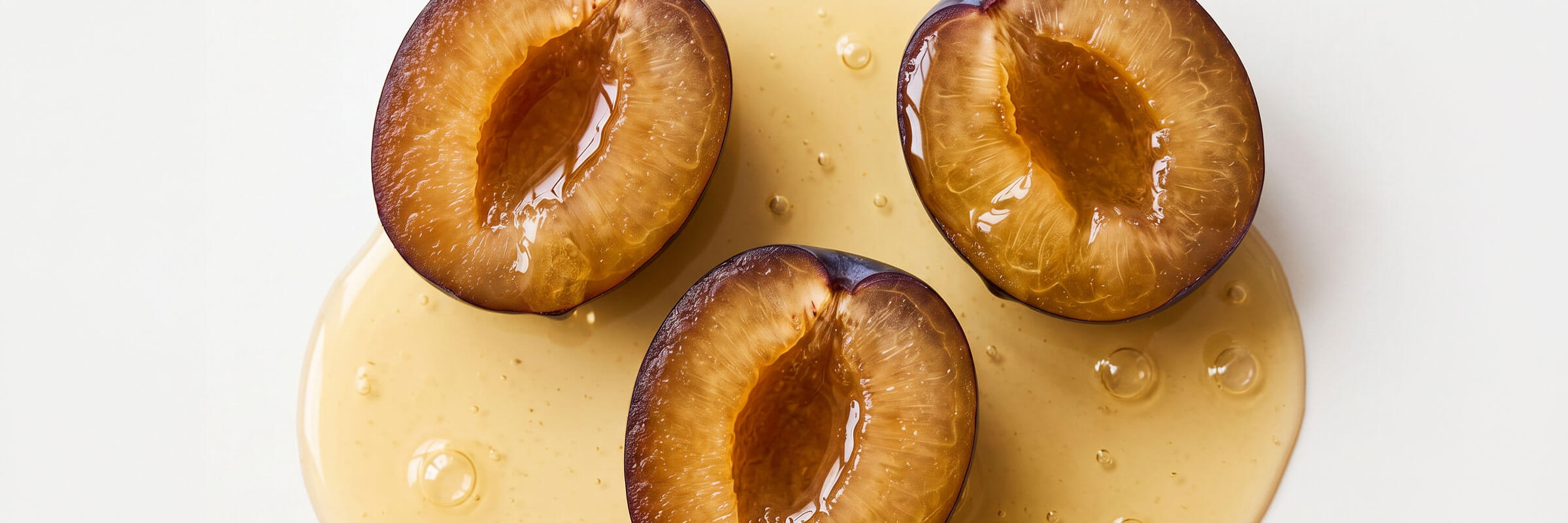
The Glow Face Serum with Plum & Prickly Pear was built around these exact principles. Four botanicals, all organic, all cold-pressed or CO2-extracted. Plum oil from a family farm in southwestern France. Prickly pear seed oil from Tunisia, cold-pressed by a women-owned supplier. Sea buckthorn CO2 from Ukraine. Rosehip CO2 from Bulgaria.
Each one was chosen for what it does, not for how it sounds on a label. The plum nourishes. The prickly pear refines. The sea buckthorn revives. The rosehip restores. Nothing in the formula is there to fill space on an ingredient list. For skin that reads tired or uneven rather than dry, this is where a formula either earns its place or does not.
Jade built it on one standard, the same one that shaped every product in the line since: if she would not feel good putting it on her own skin, she is not going to put it on anyone else's.